
The beginning of a new calendar year presents unique challenges and opportunities for CEOs and their go-to-market leadership teams. The transition from the previous year, especially after a robust Q4, often leaves organizations in a state of adjustment. This adjustment period can significantly slow productivity and put growth trajectory for the year at risk if not managed well.
Already by early March 2023, 49% of companies were adjusting their growth projections that they had put together just months before. For many organizations, Q1 underperformance can leave an insurmountable hill to climb for meeting annual performance targets. And even in cases where making the number remains achievable, a slow start to the year can set a tone that is challenging to overcome.
Preventing a similar reforecasting and ensuring a fast start to 2024 requires CEOs and their leadership teams to stay tightly focused on seven big areas, which we detail in this article. Now is not the time for strategy – strategies are set, and targets are in place. This moment is all about execution, i.e., getting back to basics and getting the team off on a fast start to the year.
Overview of Areas To Emphasize To Ensure a Fast Start to 2024
| Fast Start Area | Impact | Key Metric | Diagnostic Questions |
| Commercial Skills | Ability to hit quota | Productivity per head |
|
| Time Spend | Customer understanding and targeting | Selling time |
|
| Sales Process | Better forecasts and deal progression | Deal cycle time |
|
| Commercial Team Enablement | Enhanced sales effectiveness | Content/ training utilization and effectiveness |
|
| Coaching | Improved seller performance | Quota attainment, competency scores |
|
| Demand Generation | High-quality pipeline | Sales accepted leads |
|
| RevTech Tools | Less time on administrative activities | Technology adoption/ utilization rates |
|
Commercial Skills — Ensure the Right People Are in Seat With the Right Skills To Meet Evolving Expectations
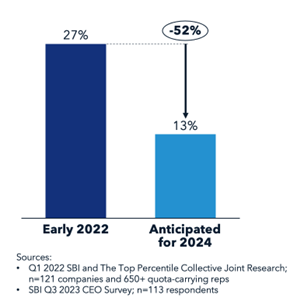
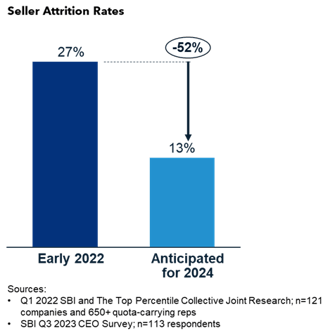
The foundation of a strong start lies in having the right talent. The competencies and capabilities of the team directly influence the execution of the commercial plan. Our research finds that seller attrition has stabilized, declining from as high as 27% in early 2022 to 13% expected by CEOs for 2024. But this declining attrition brings challenges as well, as CEOs continue to report seller productivity as flat to declining. The beginning of the year presents a prime opportunity to evaluate seller performance and consider moving on from some of the weaker, less-productive sellers.
A common mistake we see organizations make early in the year is not aligning talent with the evolving needs of the organization. For example, changing seller roles or coverage can require changes that require time to ramp into new expectations. Companies should ensure that each team member has the necessary skills and competencies for their role. For instance, a team member proficient in relationship management may struggle in a more aggressive sales environment if not adequately supported or retrained.
Follow these early-year imperatives to ensure you have the right people in seat with the right skills for a fast start to 2024:
- Critically evaluate individual seller competencies and performance, with an eye toward transitioning any lower-potential sellers early in the year when ramp time can be better managed.
- Review and inventory changes in role expectations that may have come from any reorganizations you are launching.
Time Spend — Get Specific About What You Expect Sellers To Be Doing, and Not Doing
Time management plays a pivotal role in early-year productivity. After Q4, companies often face a lull period which can reduce overall seller productivity and lead them into bad habits. The focus should be on optimizing how time is spent, ensuring that activities align with the broader commercial strategy and plan.
Companies often fail to clearly define how much time sellers should spend in the market, which can lead to inefficiencies. Our survey of over 300 sellers finds that only 35% of sellers report that their company spends as much time telling them where they shouldn’t be spending their time as they do on where they should.
Commercial leadership teams typically look at commercial time spend as a binary, i.e., administrative overhead and time with the customer. They invest heavily in new tools and processes, and even roles, to reduce the former in favor of ensuring teams have more time with customers. While reducing administrative burden is critical, what often gets overlooked is planning time. This is not time spent directly with the customer, but rather time spent on the customer, understanding their business, their needs, and developing an approach to ensure they see their own context in the seller’s talk track and offering.
Follow these early-year imperatives to ensure sellers spend their time in the right places for a fast start to 2024:
- The beginning of the year is the perfect time to clarify expectations regarding time spend. Reinforce this in kickoffs, early coaching conversations, sales playbooks, and trainings.
- Refocus your sellers on the importance of spending time on deal planning and customer understanding.
- Designate leadership time early in the year on looking for and addressing any redundancies in activity across commercial teams and time spend.
Sales Process — Provide More Structure and Clarity
A robust and adaptable sales process is crucial for early-year momentum. Yet our survey of 300+ sellers finds only 45% report that their company runs a structured, clearly defined sales process.
A frequent mistake we see is companies sticking to an outdated sales process that is not driven by the buyer's needs. Companies should evaluate and update their sales processes to be adaptable and customer-centric, reflecting current market conditions and customer behaviors. The sales process should be a living framework that's adaptable to changing market dynamics and customer needs.
A second and related mistake we see is sellers and sales managers viewing the sales process and the buyer’s journey as directly aligned. While from a design perspective, it’s convenient and useful to line buying stages up with sales process stages; however, in reality the buyer journey is rarely a straight line. It is critical that sellers adequately diagnose where the buyer is on their journey and what their needs are, regardless of what stage in the sales process they think they should be in.
Follow these early-year imperatives to ensure your sales process drives a fast start to 2024:
- Now is the time to clarify and reintroduce commercial teams to the sales process and buying journey.
- Establish a plan for revisiting the sales process regularly, evolving it based on market conditions as they take shape across the first quarter or so of 2024.
Commercial Team Enablement — Treat Enablement as a Program, Not a Series of Events
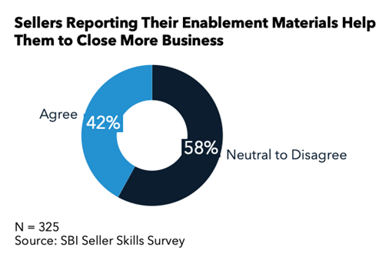
Regular and consistent enablement activities, especially in the early months of the year, can significantly improve the effectiveness of sales teams. Unfortunately for many organizations, enablement materials often fall short. Our research finds that only 42% of sellers report that the enablement materials they are given help them close more business.
Enablement is more than events and training; it is a program. It encompasses the entire spectrum of tools, resources, and training needed for sales teams to be effective. Enablement should include comprehensive resources and training on sales methodologies, processes, and customer engagement strategies. And importantly it should also target improving commercial team understanding of the product itself and how it solves a variety of customer problems.
Follow these early-year imperatives to ensure sales enablement materials are updated and available to help sellers with a fast start to 2024:
- Identify the specific materials and prompts you will use across the three months following your sales kick-off (SKO) to ensure messages and desired behavior changes stick.
- Evaluate the balance of event-based and self-serve or resource-based enablement that's planned across the first half of the year. While events are often the focus, given that the early-year environment is often less commercially intensive, now is the time to instill the right self-serve habits to drive a productive year for sellers.
Coaching — Get Frontline Sales Managers Focused on the Right Skills and Approaches
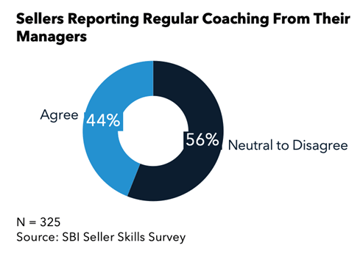
Frontline managers are instrumental in scaling sales efforts and ensuring the execution of strategies. They should be adept coaches, transferring skills and competencies to their teams. Unfortunately, only 44% of sellers report receiving regular coaching from their managers. And perhaps more critically, our research finds that when sellers do receive coaching from their managers, it’s more often on the behaviors and sales approaches that are proven to lead to a decline in overall seller productivity.
Investing in training frontline sales managers to be effective coaches can have a profound impact on the overall productivity of the sales force. Early in the year is the perfect time to do this, i.e., managers are less focused on the specifics of deals and more focused on what they can do to ensure their teams deliver on expectations for the year.
Follow these early-year imperatives to ensure frontline sales managers drive the right actions for a fast start to 2024:
- Now is the time to upskill sales managers to coach their teams toward faster deal cycle times.
- Change the management conversation to being less about where deals are (and how to push them forward), and more about how sellers are tailoring their messaging to the buyer’s own data and buying process.
Demand Generation — Replenish Pipelines Quickly
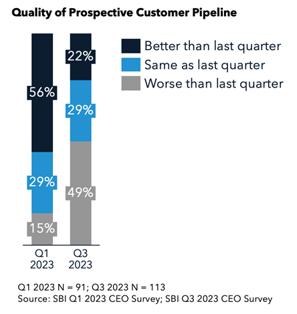
Many software companies focus on responding to active demand in the latter half of the year, neglecting the stimulation of latent demand that formulates the pipeline in the front half. A healthy pipeline is essential for a fast start. Yet, we have seen worrying declines in the reported quality of pipelines when surveying CEOs toward the end of 2023, with nearly half saying pipelines are declining in quality relative to the previous quarter.
Marketing plays an especially critical role in generating demand in the first half of the year, when sales teams are waiting on and gaining familiarity with new accounts and territories. Strategies should focus on stimulating and capturing latent demand, leveraging more targeted and relevant outbound messaging, events, and channel marketing to differentiate.
Follow these early-year imperatives to accelerate demand generation for a fast start to 2024:
- Quickly launch a two-track demand generation engine that stimulates latent or stalled demand from the back half of the year and restarts the top of the funnel with standard plays.
- Targeting and personalization are key to advancing leads through the funnel quickly, particularly as generic messaging gets ever cheaper to generate with AI tools.
Revenue Technology Tools — Make Better Use of What You Have
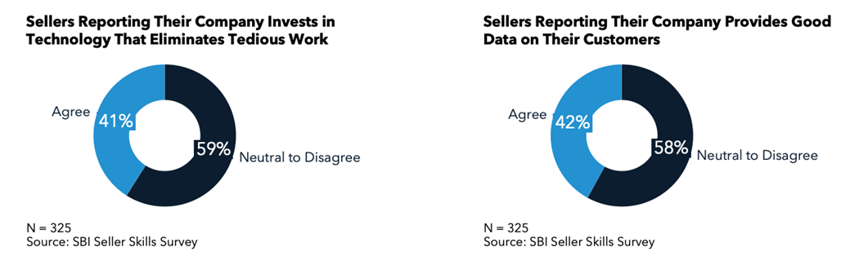
Revenue technology (RevTech) tools should enhance, not hinder, the sales process. But there are indications that tools are not having the impact they should among commercial teams. Our research finds that only 41% of sellers report that their organizations invest in technology that eliminates some of the tedious work they have to do, and only 42% feel their companies provide them good data and intel on their customers.
There are two common issues we see when it comes to under-performing tools. The first issue is the inadequate identification of the tools that sellers require for the specific marketing in which they are operating. Companies should ensure that their tech stack enhances the sales process, integrating tools that complement and streamline processes, improve data quality, and reduce administrative burden.
Second, tools will not be useful if they are built on top of bad commercial processes and bad data. The beginning of the year is a great moment to shore up those processes and data before adding to or otherwise making enhancements to the technology stack.
Follow these early-year imperatives to ensure your RevTech stack enables a fast start to 2024:
- Evaluate tech stack utilization to understand where enhancements will have the fastest impact. Focus on those technologies that commercial teams are already engaging with, to ensure fast impact instead of ramping them on new tools.
- Take the time now to clean your underlying data and processes, setting your teams up for tools that are reliable and supportive at the times when they need them most.
A Fast Start Is Within Your Reach
A fast start to 2024 hinges on a back-to-basics approach that's focused on the right talent, time management, process refinement, continuous enablement, effective coaching, demand generation, and RevTech optimization. By addressing these areas thoughtfully and deliberately, companies can position themselves well to deliver on their growth plans and broader strategies for the year.